
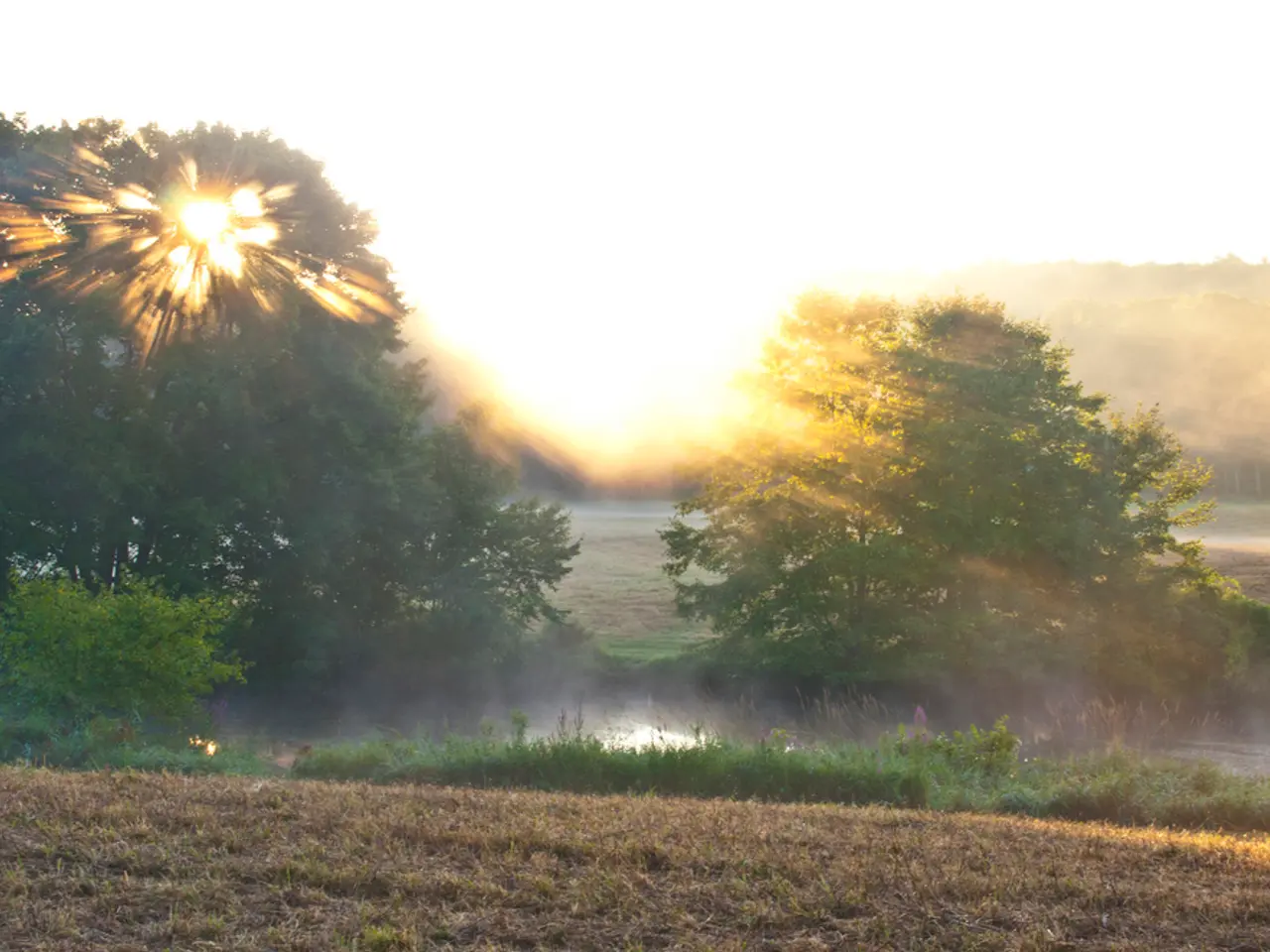
Threatened karst landscapes in Cambodia host a variety of newly discovered species.
Headline: Unique Biodiversity Threatened in Cambodia's Karst Ecosystems
Cambodia's limestone karst formations, ancient and sculpted by rain erosion, act as isolated evolutionary "islands," fostering species diversification. These unique ecosystems, which resemble Vietnam's Halong Bay, are under threat due to industrial exploitation and geopolitical instability.
Recent discoveries of new species, such as three potential new gecko species found in a single night, highlight the remarkable biodiversity hidden within these landscapes[1][3][4]. However, the expanding cement industry's demand for limestone directly degrades these habitats[1]. Additionally, surveys and conservation work are complicated by security risks, including mines, unexploded ordnance, and regional border conflicts, which have forced field teams to relocate during research[1].
Conservation organizations like Fauna & Flora International are involved in studying and advocating for these ecosystems. They emphasize the need for protection given the rapid species discovery contrasted with growing industrial pressures[1]. These karst ecosystems also hold cultural and local traditional significance[2].
The survey aims to convince the government to protect more karst in the country, but cement demand poses a challenge. Prime Minister Hun Manet praises the cement sector for job creation and tax contribution, but insists quarrying should be done responsibly[5].
Snake specialist Pablo Sinovas describes karst ecosystems as magical, while gecko expert Lee Grismer explains that isolation of one piece of karst creates evolutionary islands where species develop differently[2]. The meticulous process of cataloguing new species is essential to proving their discovery and preserving them for future study[6].
Local villagers, including Tuy Noeun, believe spirits inhabit the karst, but would still welcome a cement firm for job opportunities[7]. Sinovas compares rare species-rich karst areas to Cambodia's Angkor Wat temple complex, suggesting they should be considered national treasures[2].
The work is challenging due to the risk of mines, unexploded ordnance, and potential conflict between Thailand and Cambodia. Each catch is placed in a bag with enough air to keep it alive until cataloguing time in the morning. Each collected animal is euthanized, tagged, measured, and its DNA-rich liver is extracted for sequencing[3]. The team looks for the slightest movement or the glint of an eye to find animals as small as a pinky finger[1].
Some karst harbor venomous inhabitants, and finding one delights the team[1]. The large speckled gecko, the bent-toed gecko with a distinctive banded tail, and the web-toed gecko are potential new species discovered during the survey[3]. Grismer, a gecko expert, has found dozens of new species in his career[2].
The work continues, with the team surveying karst near the Cambodia-Thailand border to understand these ecosystems and build a case for their protection. The conservation efforts aim to safeguard the unique biodiversity and cultural values of Cambodia's karst ecosystems, which are under threat due to industrial exploitation and geopolitical instability.
[1] https://www.bbc.com/news/science-environment-59075506 [2] https://www.bbc.com/news/world-asia-59075506 [3] https://www.nature.com/articles/s41598-021-86926-7 [4] https://www.sciencemag.org/news/2021/04/cambodian-geckos-offer-glimpse-lost-world-karst-caves [5] https://www.reuters.com/article/us-cambodia-cement-idUSKBN2BQ0V3 [6] https://www.nature.com/articles/s41598-021-86926-7 [7] https://www.bbc.com/news/world-asia-59075506
- The demand from the expanding cement industry for limestone directly harms the unique biodiversity hidden within Cambodia's karst ecosystems, which are reminiscent of Vietnam's Halong Bay.
- While imperial addresses emphasize the need for protection of these ecosystems due to rapid species discovery, growing industrial pressures pose a significant challenge.
- The conservation work within these karst ecosystems, considered national treasures by snake specialist Pablo Sinovas, is essential to preserving newly discovered species for future study.
- Energy generated from quarrying, praised by Prime Minister Hun Manet for job creation and tax contribution, should be balanced against the environmental-science implications of damaging these unique ecosystems.
- The growing climate-change concerns in the industry, in conjunction with environmental-science research, may provide opportunities for sustainable manufacturing practices that minimize destruction of natural habitats like Cambodia's karst ecosystems.




