
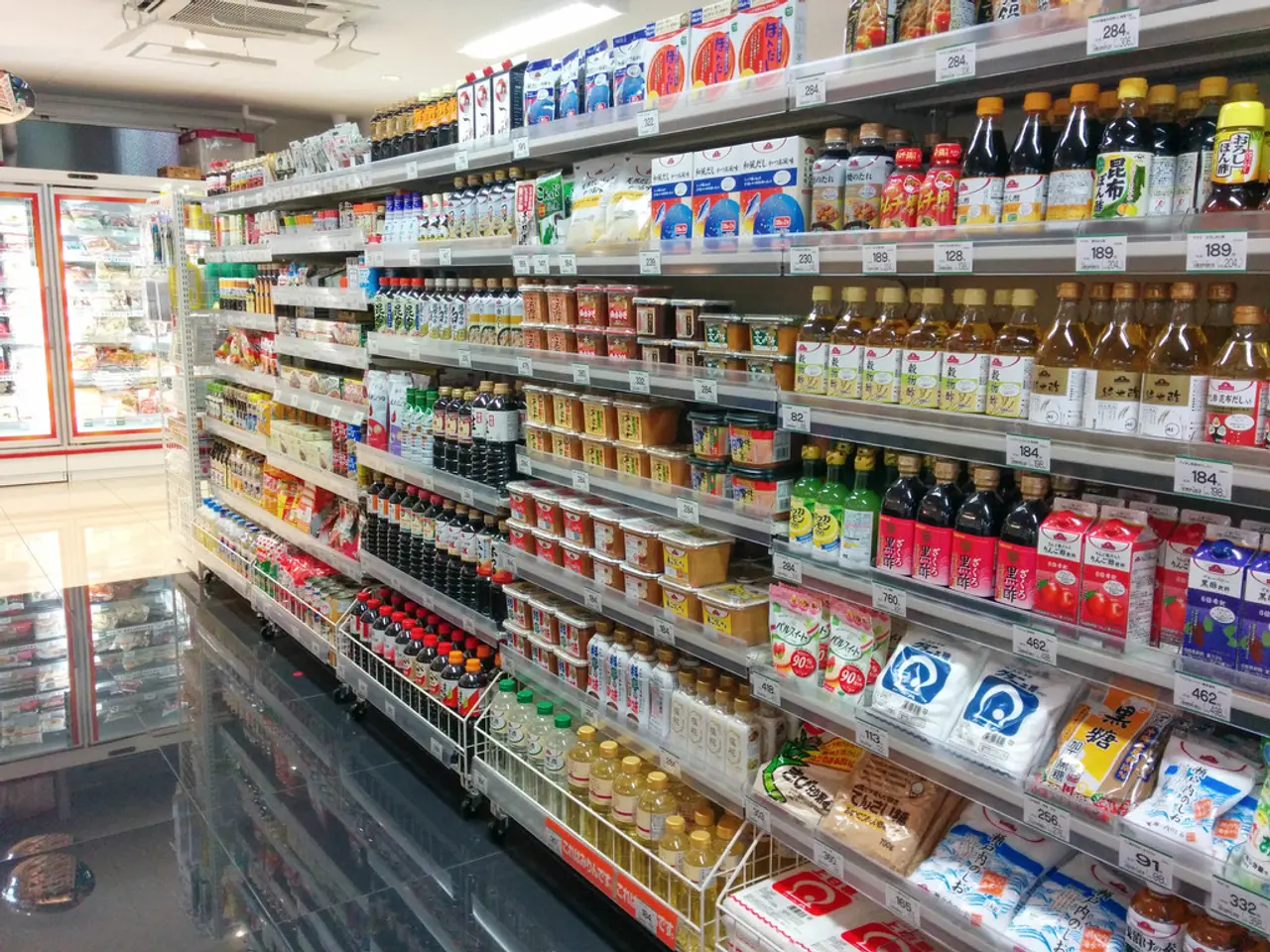
Shoppers in Russia are switching from Magnit and Petyr to a different supermarket.
In the evolving retail landscape of 2025, Russia's market faces a challenging environment marked by slow economic growth, restricted access to detailed economic and retail data, and shifting consumer behaviours.
Slowing Economy and Retail Sales
Russia's GDP growth forecast for 2025 has been revised down to around 0.9-1.0%, with retail sales showing weak real growth often masked by inflation and official data withholding. The economic slowdown, coupled with increasing concerns about worsening economic conditions and consumption patterns, has led authorities to limit public access to economic and retail data. Businesses are reporting a decline in orders and rising costs, leading to a deterioration in consumer sentiment and business activity.
The Role of Major Players
Despite these challenges, the large Russian retail chains continue to hold strong positions. However, their performance reflects the broader economic pressures. The weakening labor market and slowing wage growth curb domestic purchasing power, complicating retail expansion and pricing strategies. While specifics on individual retail companies in 2025 are limited, the uncertainty in wholesale and retail turnover suggests contraction or stagnation for some segments.
The Rise of Online Sales
Before data restrictions, online retail growth was an important trend in Russia, supported by increasing internet and mobile penetration and consumer preference shifts accelerated by the pandemic. While direct 2025 figures are scarce, the ongoing economic slowdown and reduced consumer spending likely dampen growth momentum in e-commerce, though it remains an essential channel for many retail players adapting to changing consumer habits.
Self-Checkout Cashiers
The adoption of self-checkout technology in Russian retail aligns with global trends toward automation to reduce operating costs and improve efficiency. Major Russian retailers have been gradually introducing self-checkout lanes to meet evolving customer preferences and labor market challenges. However, given economic pressures and changing consumption, investment pace in such technologies may moderate, focusing on cost-saving rather than expansion.
Competitive Pressure
The competitive pressure is intensifying among the largest retail networks in the Russian food market, including Magnit, Pyaterochka, and Svetofor. Starting July 10, 2025, Magnit and Perekrestok will actively implement the "dark store" concept, warehouses used for quick online order assembly, reducing operational expenses.
Magnit maintains its leadership by utilizing a wide network of "neighborhood format" stores, while Pyaterochka positions itself as a technologically advanced player, actively implementing digital technologies including tablets for order placement and express delivery. Both retailers are actively developing loyalty programs to retain customers, with Magnit's loyalty program having over 80 million participants.
The Emergence of Discounter Chains
The main threat to Magnit and Pyaterochka comes from discounters like Svetofor, offering products at 20-30% lower prices. Large networks may develop their own discounters to compete with Svetofor. Consumers are increasingly choosing stores that offer the most favorable conditions, leading to concerns regarding service quality and pricing issues for both Magnit and Pyaterochka.
In response to the growth of online trading, Magnit has significantly increased its online sales, while Pyaterochka is developing express delivery as a response to the growth of quick delivery services. Elena Kuznetsova, an analyst in the retail market, predicts that the importance of online channels will continue to grow.
In conclusion, the Russian retail market in 2025 is navigating economic stagnation and data opacity amid consumer caution. Major retailers work to optimize omnichannel strategies, including online sales and self-checkout cashier implementation, but their development is tempered by broader macroeconomic headwinds and constrained purchasing power.
- In the context of the challenging economic climate and restricted access to detailed data, Russian businesses are experiencing a decline in orders and rising costs, leading to a deterioration in consumer sentiment and business activity, particularly within the retail sector.
- The adoption of self-checkout technology in Russian retail, while aligning with global trends, may moderate due to economic pressures and changing consumption patterns, as the focus shifts towards cost-saving rather than expansion.




