
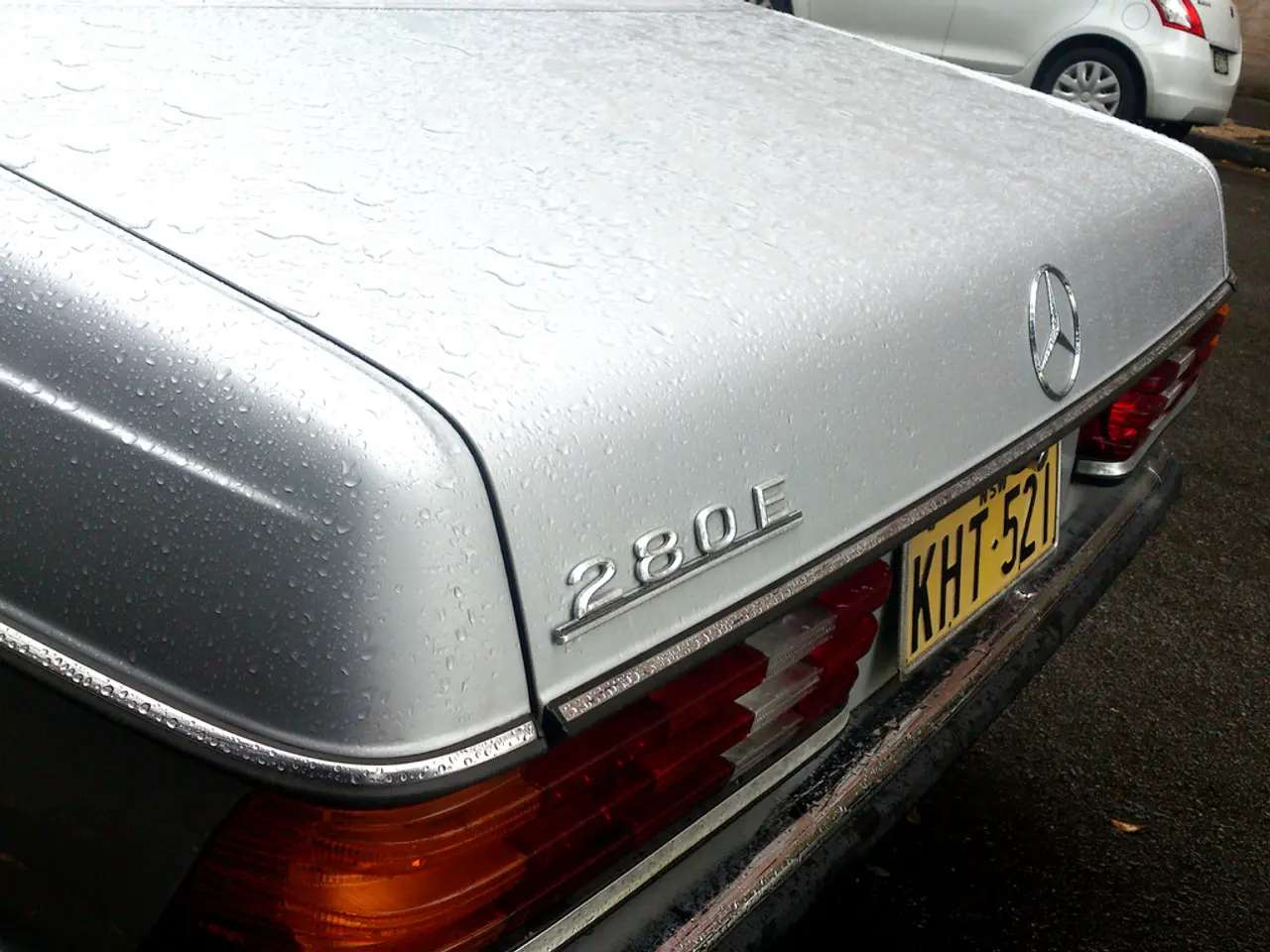
Plunging Mercedes-Benz profits prompt downward forecast adjustment
Mercedes-Benz, the iconic German automobile manufacturer, has announced a significant decline in profits for the second quarter of 2025. The company's Q2 2025 results, unveiled on Wednesday, reveal a drop of approximately 68.7% in profits compared to the same quarter in 2024.
The decline in profits is attributed to several factors, including the impact of new global trade tariffs, operational efficiency initiatives and mergers & acquisitions (M&A) activities, a challenging macroeconomic environment, and restructuring costs and legal proceedings.
The new tariffs have negatively affected revenue and Earnings Before Interest and Taxes (EBIT), while the operational efficiency initiatives and M&A activities led to €715 million in EBIT adjustments. These adjustments include the sale of production and sales capacities in Argentina. The difficult macroeconomic environment has influenced demand and operational costs. Restructuring costs and legal proceedings, particularly in the Vans division, have also contributed to profit pressures, with specific charges reported for restructuring (€30 million), M&A (€136 million), and legal proceedings (€1 million).
Despite this profit collapse, Mercedes-Benz has managed to maintain a strong free cash flow. The company's cash flow increased by 14.5% year over year to €1.9 billion in Q2 2025, demonstrating robust cash management amid adversity.
The company has revised downwards its forecast for the current financial year due to the Q2 2025 performance. The group's revenue for the rest of the year is expected to be significantly below the previous year's level, with sales of Mercedes-Benz Cars and Mercedes-Benz Vans also expected to be lower. Sales in the third quarter are expected to be slightly below those in the fourth quarter.
However, the exact reasons for the expected lower sales have not been specified, and no specific sales figures for the third quarter or a comparison between Q2 2025 and Q2 2024 sales have been disclosed. The company has also not specified the exact extent to which the sales would be lower.
The sales of Mercedes-Benz Cars are now expected to be significantly below the level of 2024. Sales in the second half of the year are expected to be at the level of the first half.
In summary, the significant profit drop was primarily a result of new global tariffs combined with strategic restructuring and M&A costs amid a tough macroeconomic backdrop. The company’s strong cash flow and solid EBIT margins across divisions indicate resilience despite short-term financial pressures.
- The challenging macroeconomic environment and restructuring costs in the Vans division have impacted Mercedes-Benz's sales, with the company expecting lower sales for the current financial year, particularly for Mercedes-Benz Cars.
- Operational efficiency initiatives and M&A activities, including the sale of production and sales capacities in Argentina, resulted in €715 million in EBIT adjustments for Mercedes-Benz.
- The automotive industry, including transportation, and finance sectors will closely watch Mercedes-Benz's performance, as its Q2 2025 results demonstrated a robust cash flow and resilience amid short-term financial pressures, despite a significant profit drop.




