
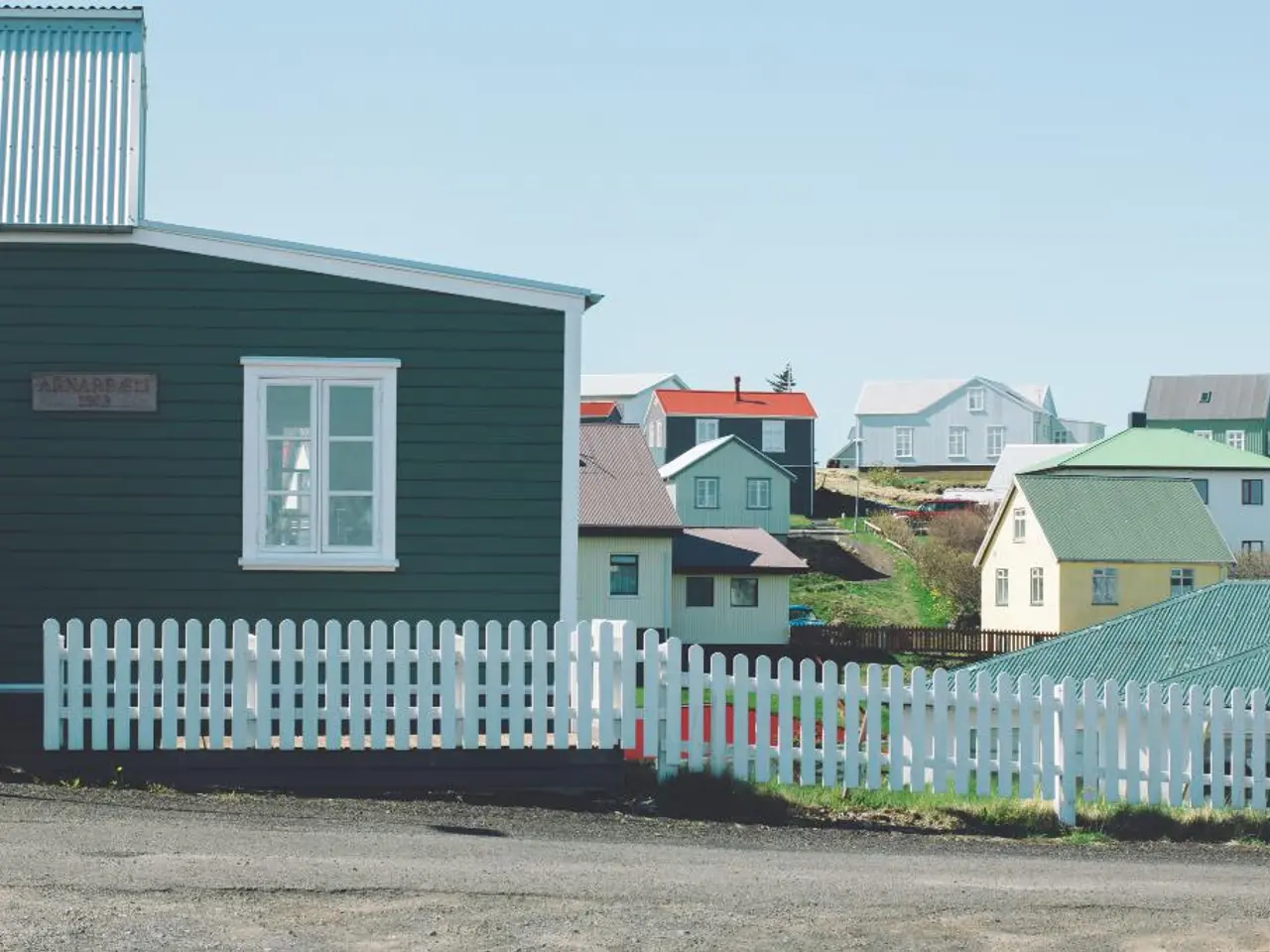
Homeownership aspiration, seemingly elusive even with low mortgage rates
In the bustling real estate landscape of Germany, 2025 has seen a significant surge in property demand and prices. This article delves into the key factors driving this market boom.
Firstly, Germany is grappling with a persistent housing shortage, particularly in major cities like Berlin, Munich, Frankfurt, and Hamburg. In 2024, building permits declined by 13.4% year-over-year, marking the fifth consecutive year of decreasing construction output. This supply deficit results in new housing completions falling about 200,000 units short annually of government targets, leading to vacancy rates in major urban centers dropping below 1%, creating a seller's market with intense competition for limited inventory.
Secondly, Germany's stable and growing economy, characterised by low unemployment, steady GDP growth, and rising wages, fuels the high demand for real estate. The expanding job market attracts both domestic and international workers, increasing housing demand in key economic hubs like Berlin, Munich, and Frankfurt.
Thirdly, continued urbanization and smaller household sizes raise the number of housing units needed. Additionally, immigration from the EU and third countries adds pressure on urban housing markets, especially in large cities.
Fourthly, Germany's real estate market is seen as one of the most stable and attractive in Europe for investors. Institutional investor interest is strong, driven by the income-generating potential of rental properties in a market with persistent demand.
Fifthly, there is a growing preference for modern, energy-efficient, and smart homes. Rising prices are particularly evident in new-build apartments, smart homes, energy-efficient buildings, and properties with outdoor spaces like balconies or terraces. Stricter energy efficiency standards and lifestyle changes post-pandemic drive demand and premium pricing for such properties, especially in cities like Hamburg.
Lastly, ongoing investments in infrastructure—transport, utilities, and digital networks—increase property values and desirability, supporting long-term demand.
In this overheated market, it is essential for those finding a building plot to familiarize themselves with the details of a mortgage in advance. Potential homebuyers can find mortgage options with banks, building societies, state funding institutes like KfW, and insurance companies. Equity plays a significant role in mortgage approval, as without any existing wealth, financing is hard to come by.
It is worth noting that mortgage rates have fallen drastically over the years. By 2021, mortgage interest rates had fallen to around 1%. KfW offers grants and loans for the new construction of a property. Online financing calculators can help determine interest rates and financing duration based on age, income, and required amount.
Experts refer to this trend as a "flight into tangible assets". This phenomenon, combined with the factors outlined above, contributes significantly to the high demand and rising prices in the German real estate market in 2025.
[1] Statista (2021) Germany: Housing shortage in major cities. Available at: https://www.statista.com/statistics/1082627/housing-shortage-in-germany-major-cities/ [2] Deutsche Welle (2021) Germans prefer energy-efficient homes. Available at: https://www.dw.com/en/germans-prefer-energy-efficient-homes/a-58725143 [3] German Property Institute (2021) Germany's real estate market: strong investor interest. Available at: https://www.germanpropertyinstitute.com/germany-real-estate-market-strong-investor-interest/ [4] Bundesbank (2021) Germany's housing market: supply shortages and rising prices. Available at: https://www.bundesbank.de/Redaktion/DE/Pressemitteilungen/2021/2021-06-10-Hauspreise-steigen-in-Grossstadtregionen.html
- The persistent housing shortage in major cities like Berlin, Munich, Frankfurt, and Hamburg, along with the growing preference for energy-efficient homes, makes the German real estate market an attractive investment opportunity for institutional investors.
- As a result of the housing shortage, the competitive housing market in Germany has led to a seller's market, where limited inventory creates intense competition, driving up property prices, making it imperative for potential homebuyers to carefully analyze their mortgage options, such as those offered by banks, building societies, state funding institutes like KfW, and insurance companies.




