
Financial Alternative Carries Potential Dangers
In the heart of urban planning, tolls on bridges and highways continue to spark debate. The recent implementation of a toll for vehicles traveling to Manhattan in New York, and the A25 bridge in Quebec, have brought this issue to the forefront.
The uncertainties of the trade war and the introduction of artificial intelligence in the world of work have added a layer of complexity. It is crucial that we avoid adding more obstacles to downtown areas, as Jean-Philippe Meloche, a prominent voice in urban planning, suggests. The goal, he states, is to have economic activities that are as minimalistic as possible in terms of infrastructure.
In Quebec, the urgency is to prioritize the maintenance of current infrastructures and build as few new ones as possible. Christian Savard, general director of Vivre en Ville, shares this sentiment, expressing concern that Montreal may not be competitive in attracting workers compared to suburban areas, where parking is free.
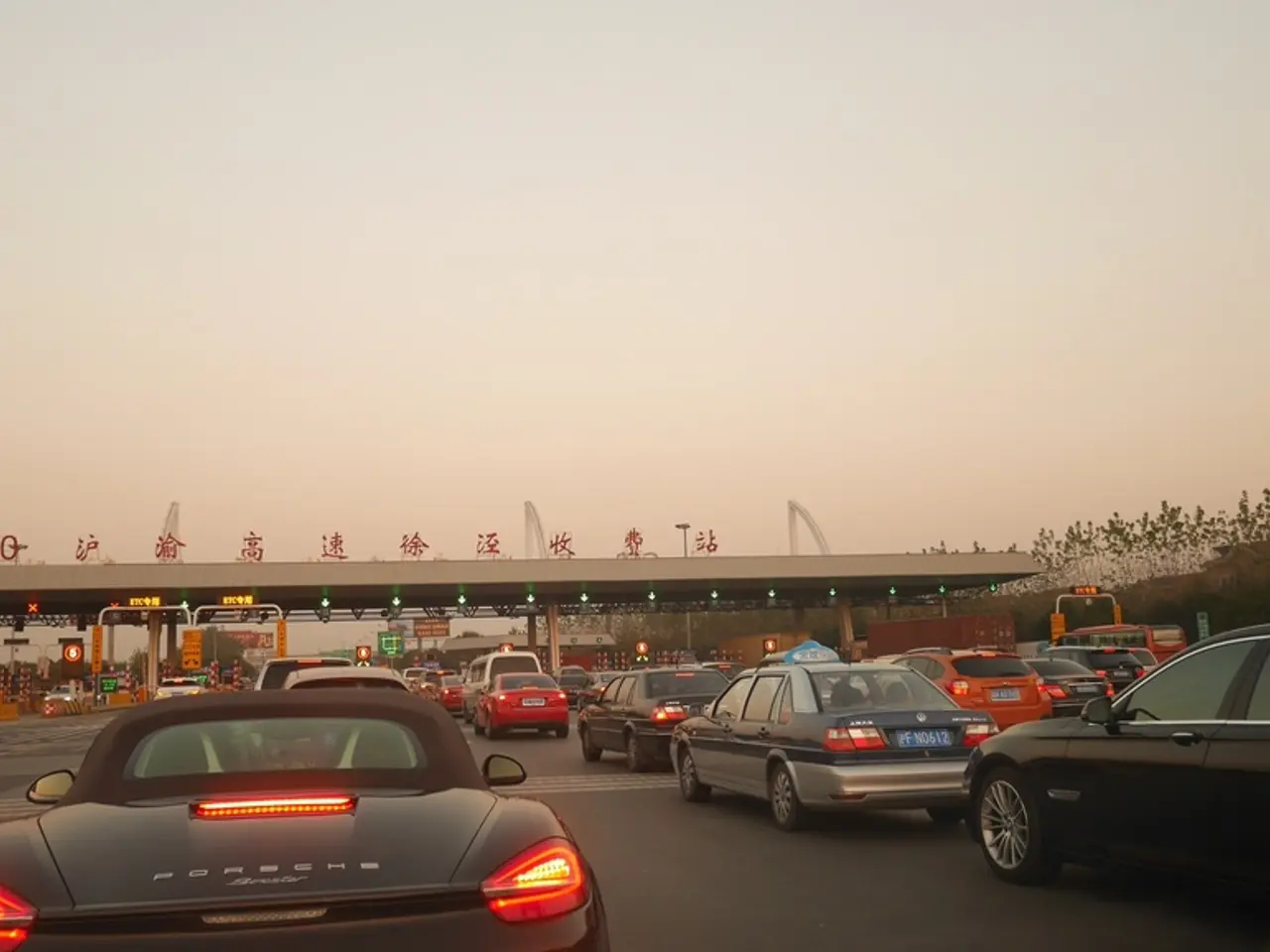
The installation of tolls on infrastructure raises questions, particularly when not all infrastructure is charged or when there is no effective public transit alternative. For instance, there are no tolls on the Samuel-De Champlain Bridge or the Louis-Hippolyte-La Fontaine tunnel. However, on the A25 highway bridge, tolls vary depending on the time of day to redirect traffic to off-peak periods and slow down infrastructure degradation.
Tolls serve as a financial instrument and a management tool for infrastructure, allowing for more strategic and resilient planning. They provide a revenue stream that can support targeted investment, maintenance, and operational improvements, potentially reducing congestion and enhancing connectivity.
Infrastructure planning benefits from tolls in several ways. They generate funding beyond traditional public budgets, prioritise projects with measurable economic and social benefits, and implement resilience measures. However, their adoption in Quebec and other Canadian provinces must carefully weigh economic benefits against equity and political factors to design fair, effective systems.
Arguments for toll implementation include economic growth facilitation, improved connectivity and management, sustainable funding sources, and equity considerations. On the other hand, arguments against tolls often revolve around public resistance, equity concerns, economic uncertainty, administrative complexity, and costs.
In Quebec specifically, historically, toll proposals for bridges or highways have sparked debate over the balance between funding needs and public acceptance. The provincial government and municipalities would need to consider stakeholder engagement and transparent ROI metrics to build political and social support.
The future of tolls in Quebec remains uncertain. Minister of Transportation Geneviève Guilbault has left open the possibility that a type of toll could be implemented on a potential bridge to Tadoussac or on the third link, but there is no certainty. Meanwhile, during the last election campaign in Canada, both Mark Carney and Pierre Poilievre promised to reduce or eliminate tolls for crossing the Confederation Bridge, which connects Prince Edward Island to New Brunswick.
As we navigate this complex issue, it is essential to strike a balance between economic growth, infrastructure maintenance, and social equity. The goal should be to design toll systems that are fair, effective, and minimally disruptive to the everyday lives of commuters.
In the discussion of tolls for infrastructure, the political industry must consider not only economic benefits but also equity and public acceptance, as demonstrated by the historical debates in Quebec. The finance sector could benefit from tolls as a strategic tool for funding infrastructure maintenance and improvements, aligning with the minimalistic approach suggested by Jean-Philippe Meloche in urban planning.
To avoid negative impact on business, such as Montreal losing competitiveness due to paid parking compared to suburban areas, the implementation of tolls must prioritize fairness, ensuring a balanced approach that takes into account economic growth, infrastructure maintenance, and social equity.




