
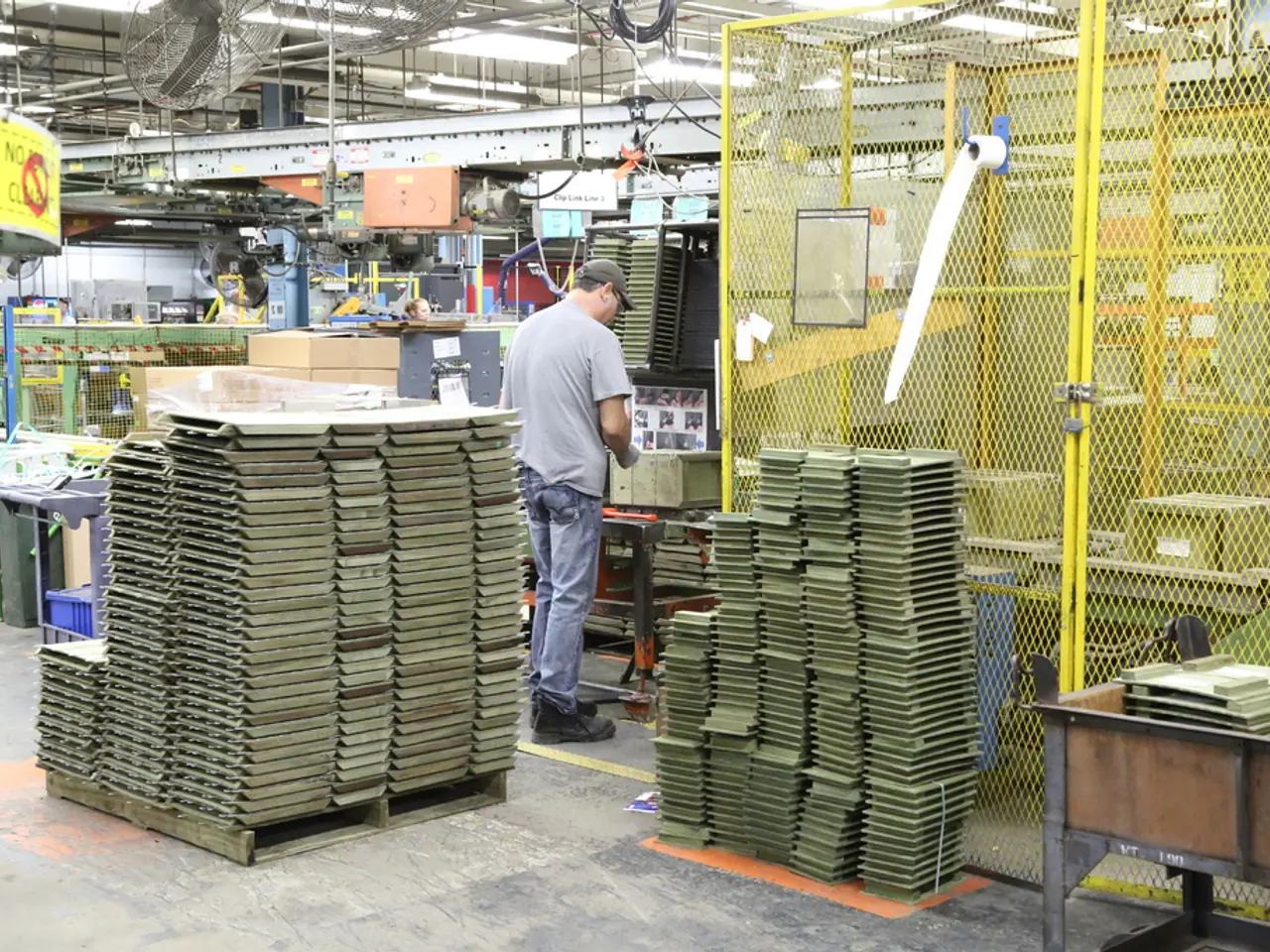
Factory production in Germany reaches a record low post-Covid pandemic
Germany's industrial output and export sector have been significantly impacted by the new U.S. tariffs, leading to a sharp decline in production and a sustained fall in exports to the U.S.
In mid-2025, Germany's industrial production dropped to a 5-year low, with a 1.9% month-on-month decline and a 3.6% year-on-year contraction. Key sectors affected include machinery manufacturing and pharmaceuticals. The Federal Ministry for Economic Affairs and Energy predicts a near-term recovery is unlikely due to worsening trade conditions and softening demand from non-eurozone markets, including the U.S.
Exports to the U.S. specifically fell 2.1% in June 2025, marking the third consecutive monthly decline and the lowest level since early 2022. Given that approximately 10% of German exports go to the U.S., these tariffs have put substantial strain on Germany's export-driven economy.
The automotive industry, a cornerstone of German exports, has been hit particularly hard. German carmakers face not only the direct effects of the tariffs but also rising upstream costs due to U.S. duties on steel and aluminum, which inflate manufacturing costs. Companies like Volkswagen and Audi have reported significant losses due to these tariff-related costs.
The tariffs are expected to cost the German automotive sector billions annually, worsening existing structural challenges and complicating the transformation of the industry.
Analysts, such as Carsten Brzeski from ING bank, describe the industry as being stuck in a "very long bottoming out." Helena Melnikov, the head of the German chambers of commerce, also expressed concerns about potential worse consequences due to ongoing negotiations.
The US has increased its baseline levy on EU exports to 15% from 10%, and investigations are underway into sectors including pharmaceuticals and semiconductor equipment. This heightens worries about future business activity in Germany.
The current data could prompt a downward revision to the initial estimate showing that the German economy shrank slightly in the second quarter. The tariffs make it harder to do business in Germany, and industrial orders fell 1.0% month-on-month in June, following a 0.8% drop in May.
Despite a rise in business morale in July, hard data on business activity has not been as rosy. The machinery and pharmaceutical sectors had particularly heavy falls. Fixing the eurozone's traditional export powerhouse has been a key priority for Germany's new conservative Chancellor Friedrich Merz.
However, experts suggest that better data early in the year was the temporary effect of US "front-loading." The tariff increase affects German exporters, and the federal statistics agency Destatis revised May industrial production data, saying it fell 0.1%.
In summary, the U.S. tariffs have led to a sharp decline in German industrial production to multi-year lows, a sustained fall in German exports to the U.S., heavy financial burdens and profits reduction for major German manufacturers, especially in automotive, and a bleak short-term outlook for Germany’s industrial recovery amid ongoing tariff pressures.
Finance ministers in Germany are scrambling to find solutions to alleviate the strain on the national economy, particularly the finance sector, as a result of increased U.S. tariffs. The challenging trade conditions and the subsequent decline in exports have also raised concerns about the country's general-news landscape, as their ability to bounce back might be compromised.




