
Exploring Spending Habits: Classifications and Case Studies
In the world of economics, consumer spending plays a pivotal role in driving overall growth. Known as aggregate demand, it comprises three main categories: durable goods, non-durable goods, and services.
Durable goods, designed to provide utility and function over extended periods, are items expected to last several years, such as cars and appliances. Spending on these goods is highly sensitive to economic uncertainty and price changes. The year 2025 saw a significant decline in durable goods spending, amounting to $49.2 billion, due to tariff-driven cost increases on components and cautious consumer behavior delaying big-ticket purchases amid trade tensions and margin pressures on manufacturers. This decline signalled consumers' reluctance to commit to long-term investments when facing economic or policy uncertainty.
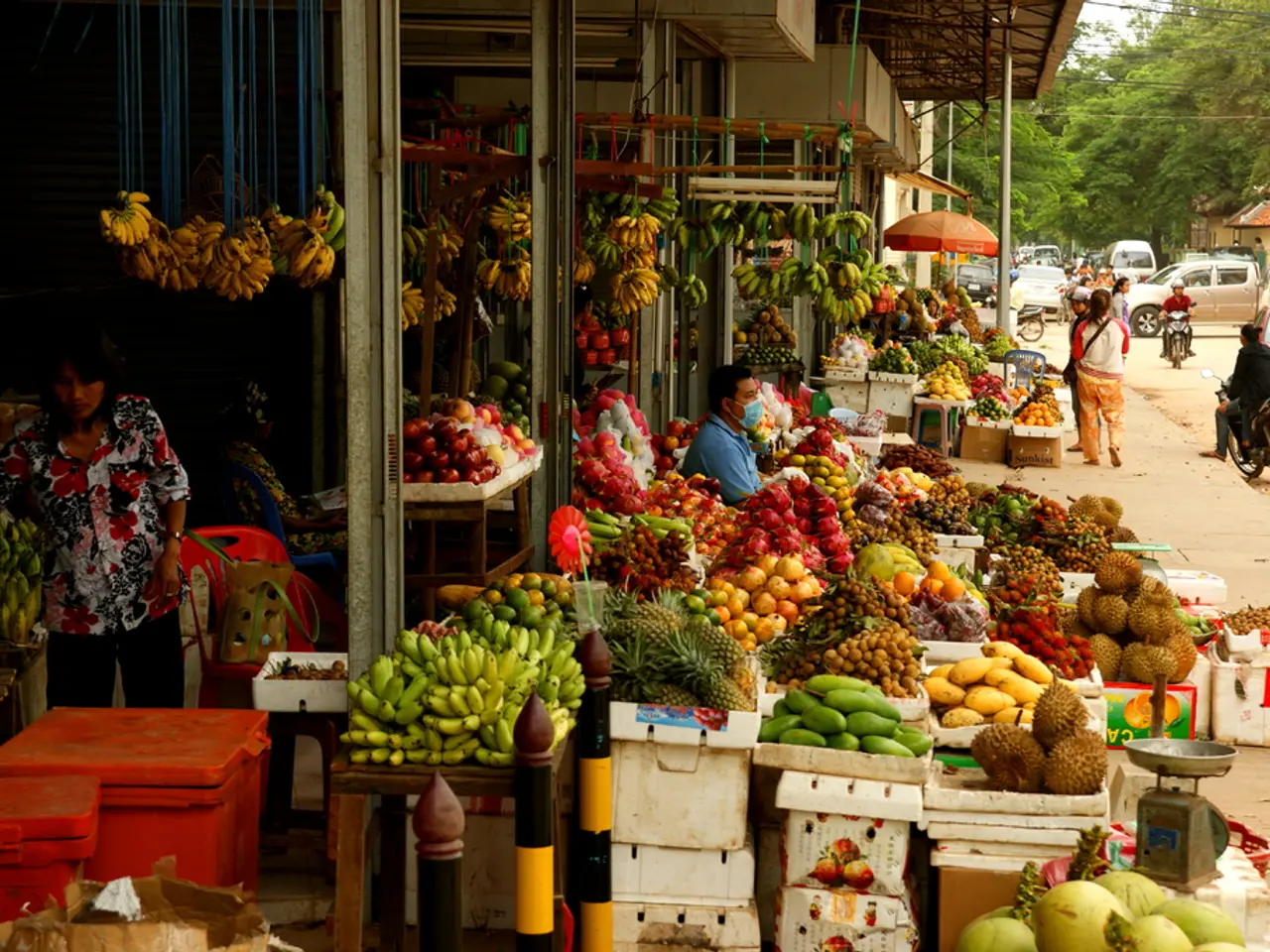
On the other hand, non-durable goods and services spending tends to be more stable. Non-durable goods, such as groceries and clothing, are subject to factors like inflation and seasonal trends. Services, intangible experiences that provide benefits to consumers, delivered by people or systems, include a wide range of offerings like plumbing repairs, healthcare, financial planning, and banking services. Services contribute to overall well-being by providing consumers with a sense of well-being, convenience, or problem-solving.
Consumer spending growth overall remains positive but is forecast to slow, influenced by cooling labor markets and inflationary pressures. Nominal spending growth is projected at 3.7% in 2025, down from 5.7% in 2024. This slowdown reflects more cautious consumer behavior despite still low unemployment and generally healthy balance sheets among affluent consumers.
The composition of spending impacts economic growth. GDP growth is closely linked to consumer expenditures across these categories. When consumers spend more on durable and nondurable goods and services, GDP rises, stimulating business investment and payment industry activity. Conversely, sharp pullbacks in consumer spending, especially on durables, often presage slower GDP growth.
In summary, high spending on durable goods typically signals consumer confidence and drives robust economic growth but is vulnerable to economic shocks and tariffs, causing consumers to delay purchases. Spending on non-durable goods and services tends to be steadier, supporting more consistent GDP growth. Overall consumer behavior shifts—cautious spending on durables, moderation in nondurables and services—reflect and shape the pace of economic growth in times of uncertainty.
Economists assume individuals allocate their income for two purposes: consumption and saving. A rise in aggregate demand due to increased consumer spending translates to businesses increasing production, leading to job creation and economic growth. Fluctuations in spending on non-durable goods, such as groceries and clothing, can serve as economic indicators, reflecting consumer confidence and overall economic activity.
Marketing services requires a different approach, with elements like people, processes, and physical evidence being crucial for a positive customer experience. The unemployment rate falls as businesses hire more workers to meet demand, creating a positive cycle as newly employed individuals have more income to spend. Consumption expenditure acts as the engine that propels economic growth, with increased spending leading to businesses producing more and creating a positive ripple effect throughout the economy.
In conclusion, understanding consumer spending patterns, particularly durable goods and non-durable goods spending, provides valuable insights into economic health and growth trajectories.
The decline in durable goods spending in 2025, amounting to $49.2 billion, was largely due to tariff-driven cost increases on components and cautious consumer behavior delaying big-ticket purchases amid trade tensions and margin pressures on manufacturers, signaling consumers' reluctance to commit to long-term investments when facing economic or policy uncertainty.
Services, such as financial planning and banking services, contribute to overall well-being by providing consumers with a sense of well-being, convenience, or problem-solving, and are less sensitive to economic uncertainty compared to durable goods spending.